

Did you know that 500 hours of video are uploaded to YouTube every single minute? That’s not a typo. Every 60 seconds, creators around the world are flooding the platform with content — which means standing out and actually growing your channel has never been more challenging. Or more rewarding, if you know what you’re doing.
Here’s the thing: subscribers aren’t just a vanity metric. They’re your ticket to YouTube’s Partner Program (YPP), which requires 1,000 subscribers and 4,000 watch hours before you can start earning ad revenue. Beyond monetization, a strong subscriber base means more views, more trust, and a real audience that shows up every time you post.
So how do you grow subscribers on YouTube when the competition is fiercer than ever? That’s exactly what this guide is about.
Whether you’re starting from zero or stuck at a few hundred subs, this article walks you through 10 proven steps — from setting up your channel the right way to mastering YouTube SEO, using Shorts strategically, and even the smart (and risky) world of buying subscribers. We’ll also give you a 30-day action plan you can start today.
Let’s get into it.
Understanding the YouTube Algorithm in 2026
Before you can beat the algorithm, you need to understand what it actually wants. YouTube’s algorithm isn’t some mysterious black box — it’s a recommendation engine with one job: keep people watching. The more your videos do that, the more YouTube pushes them to new viewers.
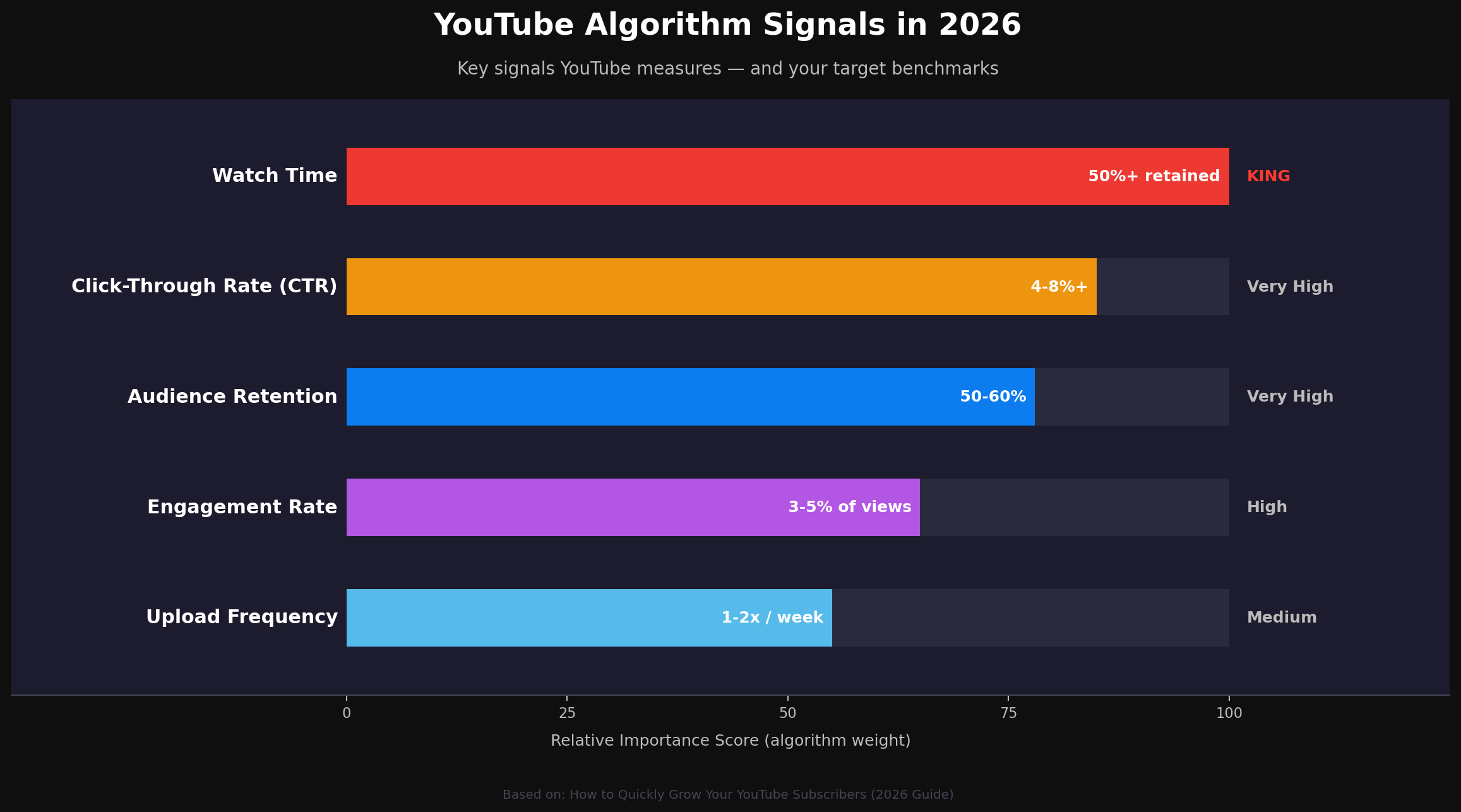
Here are the key signals the algorithm measures in 2026:
| Algorithm Signal | What It Measures | Why It Matters | Target Benchmark |
|---|---|---|---|
| Watch Time | Total minutes watched | Higher = more recommendations | 50%+ retention per video |
| Click-Through Rate (CTR) | % who click after seeing thumbnail | Shows appeal of thumbnail/title | 4–8%+ |
| Audience Retention | % of video watched | Tells YouTube content quality | 50–60% |
| Engagement Rate | Likes, comments, shares | Signals content resonates | 3–5% of views |
| Upload Frequency | How often you post | Signals active channel | 1–2x per week |
Watch Time is still king. YouTube wants to see people spending time on your videos — not clicking away after 10 seconds. Audience Retention tells YouTube whether your content actually delivers on its promise. If people drop off at the 30-second mark, that’s a red flag.
CTR is what gets people to click in the first place, so your thumbnails and titles are critical (more on that in Step 4). And engagement signals — likes, comments, shares — tell the algorithm that your content sparked some kind of reaction, which is a green light for broader distribution.
The good news? You don’t need to game these signals. You just need to create genuinely useful, well-packaged content — and the rest of this guide shows you exactly how.
Step 1 – Set Up Your Channel for Success
Most beginners skip this step and jump straight to uploading videos. Don’t. Your channel page is your storefront, and it needs to make a strong first impression if you want visitors to hit that subscribe button.
Choose the Right Channel Name
Your channel name should be easy to remember, easy to spell, and ideally include a relevant keyword if it sounds natural. You don’t have to be too literal (think “MrBeast” — no keywords, but unforgettable). For niche channels, something like “Budget Travel Tips” or “Quick Fitness Fix” tells visitors immediately what you’re about.
Profile Photo and Banner
Use a clear, high-resolution profile photo — ideally your face if you’re a personal brand, or a clean logo if it’s a branded channel. For the banner, use YouTube’s recommended size (2560 x 1440 px) and keep it uncluttered.
Pro Tip: Your banner should tell visitors exactly what your channel is about in one sentence.
Write a Keyword-Rich About Section
Your About section is indexed by both YouTube and Google. Use your primary keywords naturally in the first 150 characters — that’s what shows in search previews. Mention who the channel is for, what you cover, and how often you upload.
Create a Channel Trailer
A 30–60 second trailer should answer one question: “Why should I subscribe?” Skip the fluff. Show your best content, tell people who you are, and end with a clear ask. This is the first thing non-subscribers see when they land on your page.
Organize with Featured Sections and Playlists
Group your videos into playlists from day one. Playlists increase watch time because YouTube auto-plays the next video. Use featured sections on your homepage to highlight your best series, most popular videos, and recent uploads.
Step 2 – Create Content People Actually Want to Watch
Here’s the uncomfortable truth: most new creators make content they want to make instead of content people are searching for. The good news is that finding proven topics isn’t hard — you just need to know where to look.
Find Proven Topics Before You Film
- YouTube autocomplete is your best free research tool. Start typing a keyword into the YouTube search bar and watch the suggestions appear — those are real searches people are making right now.
- Google Trends shows you whether interest in a topic is rising or falling. Use it to validate ideas before investing time in them.
- Competitor research is gold. Look at channels in your niche with 10,000–100,000 subscribers and filter their videos by most views. Those top performers tell you exactly what your audience wants.
Hook Viewers in the First 10 Seconds
If you lose people in the first 10 seconds, the rest of the video doesn’t matter. Start with a bold statement, a surprising fact, or a clear promise of what they’ll get by the end. Skip long intros, jingles, and “welcome back to the channel” — no one cares about that until they know you.
Deliver Clear, Specific Value
Tutorials, lists, and how-to videos consistently outperform other formats for new channels. They match high-intent searches, they’re easy to follow, and they give viewers a reason to subscribe for more. Vague “vlog” content works for established creators — not beginners.
Balance Evergreen and Trending Content
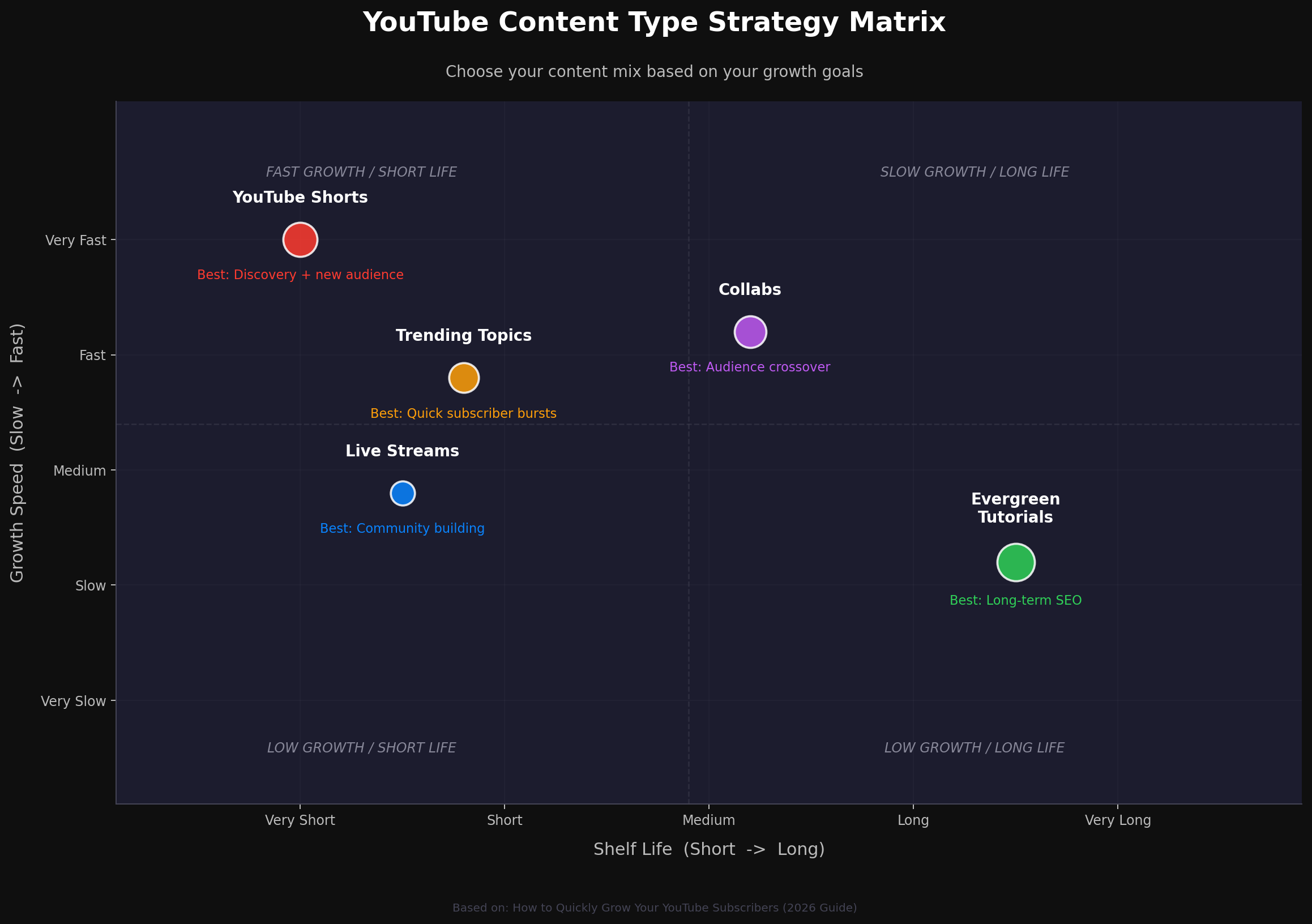
Evergreen content (topics that stay relevant for years) builds a foundation. Trending content gives you quick spikes. A good rule of thumb: 70% evergreen, 30% trending.
| Content Type | Growth Speed | Shelf Life | Best For |
|---|---|---|---|
| Evergreen Tutorials | Slow but steady | Years | Long-term SEO |
| Trending Topics | Fast spike | Days/weeks | Quick subscriber bursts |
| YouTube Shorts | Very fast | Short | Discovery + new audience |
| Live Streams | Medium | Live only | Community building |
| Collaboration Videos | Fast | Months | Audience crossover |
Step 3 – Master YouTube SEO
Learning how to grow subscribers on YouTube means learning SEO. YouTube is the world’s second-largest search engine, and videos that rank in search get consistent, compounding views for months or years.
Start with Keyword Research
Three tools every creator should know:
- TubeBuddy — browser extension that shows keyword scores, competition, and SEO grades directly on YouTube
- VidIQ — similar to TubeBuddy, plus analytics and trending alerts
- YouTube autocomplete — free, real-time, and underused
Look for keywords with decent search volume but manageable competition. Long-tail keywords (“how to edit YouTube videos on iPhone for free”) are easier to rank for than short, broad ones (“video editing”).
Write Titles That Rank
Put your primary keyword at or near the beginning of the title. Keep titles under 60 characters so they don’t get cut off in search results. Make them specific — “How to Lose 10 Pounds in 30 Days Without the Gym” will always outperform “Weight Loss Tips.”
Optimize Your Description
The first 150 characters of your description show up in search results before the “Show more” cutoff — make them count. Your full description should be 200+ words, naturally using your target keyword and related terms. Include links, timestamps, and a call to subscribe.
Use Tags Strategically
Tags still matter, just less than they used to. Aim for 10–15 tags, mixing broad terms (like “fitness”) and specific ones (like “home workout for beginners no equipment”). Don’t keyword-stuff — irrelevant tags can actually hurt you.
Add Chapters and Name Your Files Right
Chapters (timestamps) in the description improve user experience and appear as featured snippets in Google search — double win. And before you upload, rename your video file to include your target keyword (e.g., how-to-grow-youtube-channel-2026.mp4). It’s a small signal, but every bit helps.
Step 4 – Thumbnails & Titles That Get Clicks
You can have the best video in the world, but if nobody clicks on it, it doesn’t exist. Your thumbnail and title are the two things that decide whether someone watches your video or keeps scrolling.
Thumbnail Best Practices
- High contrast colors — bright, bold backgrounds that stand out against YouTube’s white interface
- Bold, large text — keep it to 3–5 words max; it needs to be readable on a phone screen
- Faces with emotion — human faces, especially with expressive reactions, dramatically boost CTR
- Consistency — use a similar style across all thumbnails so your channel becomes recognizable in the feed
A/B Test Your Thumbnails
YouTube Studio now lets you test multiple thumbnails against each other. Take advantage of this. Sometimes a small change — a different background color, a different facial expression — can double your CTR. Run tests on your highest-performing videos first.
Title Formulas That Work
Some title structures are proven click magnets:
- “How to [X] Without [Y]” — e.g., “How to Build Muscle Without a Gym”
- “X Things Every [Audience] Should Know” — e.g., “7 Things Every New YouTuber Should Know”
- “Why [Common Belief] Is Wrong” — e.g., “Why Posting Every Day Won’t Grow Your Channel”
Why CTR Matters So Much
CTR directly impacts how widely YouTube distributes your video. A video with a 2% CTR gets shown to fewer people than one with a 6% CTR, even if the content is identical. Think of your thumbnail and title as the packaging — it needs to sell the product before anyone even opens it.
Step 5 – Post Consistently (And Don’t Burn Out)
Here’s a hard truth that most YouTube advice glosses over: consistency matters more than quality in the early stages. A mediocre video published on schedule will outperform a perfect video that never gets made.
The biggest mistake beginners make is setting an unsustainable pace — committing to daily uploads, burning out after two weeks, and going dark for months. YouTube’s algorithm rewards active channels and punishes dormant ones.
Choose a Realistic Schedule
Start with a schedule you can maintain even on your worst week. For most beginners, once or twice a week is the sweet spot. Set a publish day and stick to it — your audience will start to expect it.
Batch Your Content
Filming and editing one video at a time is inefficient. Instead, batch-produce 3–5 videos in one session and schedule them ahead. This gives you a buffer for life’s interruptions and keeps the algorithm fed even when you’re busy.
Use a Content Calendar
Map out your next 4–8 videos in a simple spreadsheet. Include the topic, target keyword, publish date, and thumbnail idea. Having a plan eliminates the “what should I make next?” paralysis that kills so many channels.
| Channel Stage | Recommended Frequency | Notes |
|---|---|---|
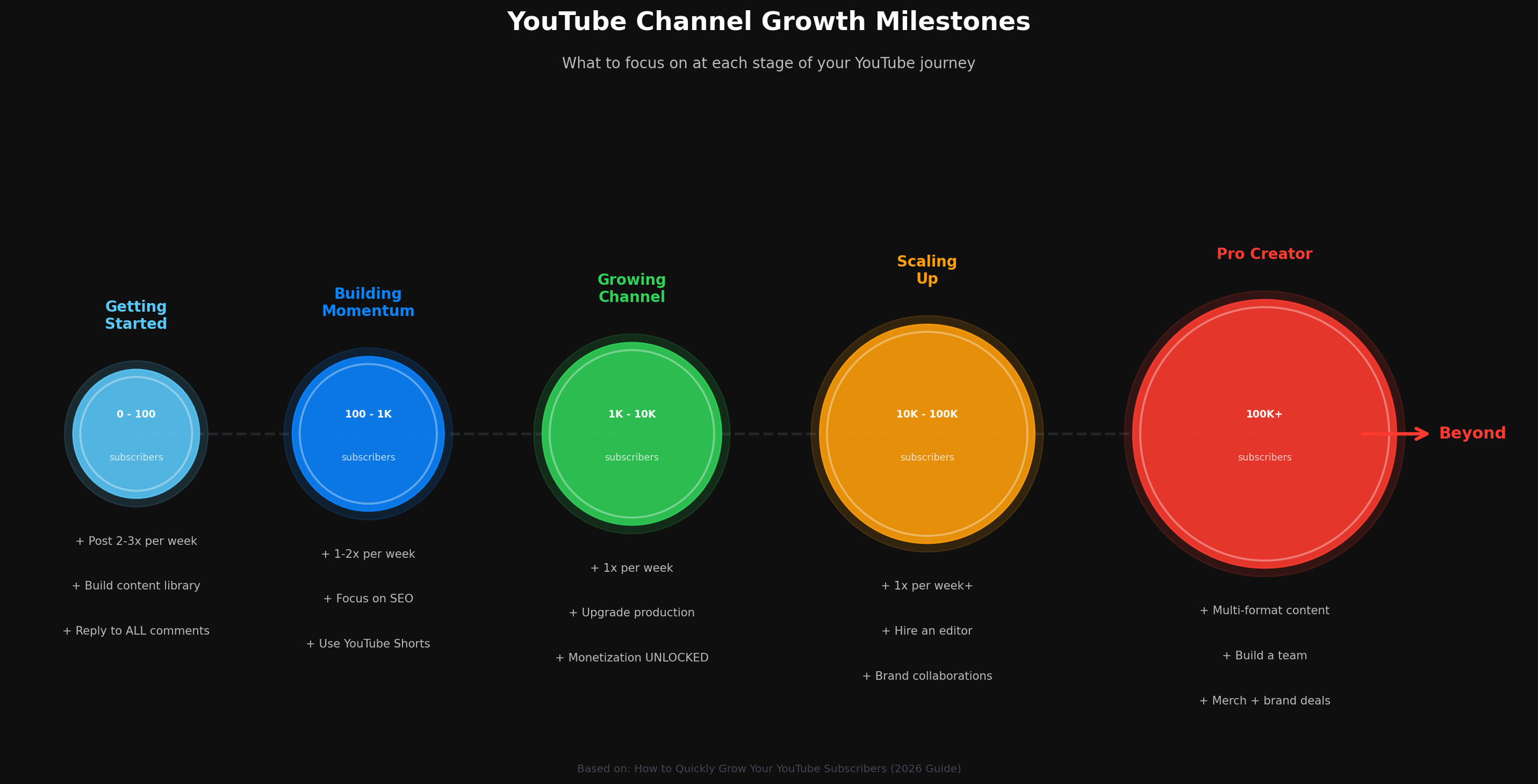
| 0–100 subscribers | 2–3x per week | Build content library fast |
| 100–1,000 subscribers | 1–2x per week | Focus on quality + consistency |
| 1,000–10,000 subscribers | 1x per week | Invest more in production |
| 10,000+ subscribers | 1x per week or more | Hire editors, double down on top formats |
Step 6 – Engage With Your Audience
One of the fastest ways to grow your channel — and one of the most overlooked — is simply talking to your viewers. Engagement isn’t just a metric; it’s a relationship.
Reply to Every Comment (Yes, Every One)
In the early days, reply to every single comment you get. It signals to YouTube that your content drives conversation, and it shows your audience that there’s a real person behind the channel. People who feel seen are far more likely to subscribe and come back.
Use Comment Features Strategically
- Pin a comment at the top asking a question — this drives more replies and boosts engagement signals
- Heart comments from fans to reward participation
- Ask a question at the end of every video — something simple like “What would you try first?” invites responses
Build Community Beyond the Videos
Once you hit 500 subscribers, you unlock the Community tab — use it to post polls, behind-the-scenes updates, and questions between video uploads. It keeps your audience engaged even when you’re not posting. And if you’re comfortable on camera, live Q&As are one of the fastest ways to turn casual viewers into loyal subscribers.
Step 7 – Promote Outside YouTube
The fastest-growing channels don’t just wait for YouTube to send them traffic. They go out and bring viewers in from other platforms.
Social Media Cross-Promotion
- Reddit — Find subreddits related to your niche and share your videos when they genuinely add value to a discussion (don’t just spam links)
- Twitter/X — Share clips, behind-the-scenes, and video announcements; use relevant hashtags
- Instagram Reels and TikTok — Repurpose your best moments as short clips to drive people to your full YouTube content
- Pinterest — Massively underrated for tutorial and how-to channels; pins drive traffic for years
Embed Videos in Blog Posts
If you have (or can start) a blog, embed your YouTube videos in related articles. Every view from an embedded video counts toward your watch time. It also improves your blog’s time-on-page, so it’s a win-win.
Build Even a Tiny Email List
An email list — even 50 people — gives you a direct line to your most loyal viewers. Every time you publish, send a quick email. Those people are far more likely to watch, comment, and share than cold traffic. Tools like Mailchimp or ConvertKit have free tiers to get started.
Step 8 – Use YouTube Shorts to Explode Your Growth
YouTube Shorts is the single biggest growth opportunity on the platform right now for new creators. If you’re not using it, you’re leaving subscribers on the table.
Why Shorts Work So Well for New Channels
YouTube is actively pushing Shorts to compete with TikTok and Instagram Reels. That means Shorts get disproportionate distribution — especially for smaller channels that the algorithm hasn’t fully figured out yet. A single viral Short can add thousands of subscribers overnight.
How to Make Shorts That Convert
- Hook in the first 1–2 seconds — Shorts viewers scroll fast; you have less than a second to stop the scroll
- Keep it under 60 seconds — the sweet spot is 30–45 seconds
- End with a call to action — something like “Follow for more tips like this” or “Full video on my channel”
- Don’t just repost TikToks — YouTube penalizes content with TikTok watermarks. Create natively or remove the watermark first.
Repurpose Long-Form Into Shorts
Go back through your existing videos and pull out the most interesting 30–45 second clips — a surprising stat, a quick tip, a compelling moment. You already made the content; now get double the mileage from it.
Posting 3–5 Shorts per week is totally manageable and can dramatically accelerate how fast you grow subscribers on YouTube, especially in your first few months.
Step 9 – Accelerate with Bought Subscribers (The Smart Way)
Let’s talk about something most YouTube guides refuse to touch: buying subscribers.
Organic growth takes time — sometimes a lot of it. Many creators, especially those building a brand or business around their channel, choose to supplement their organic efforts with a subscriber boost. Done right, it’s a legitimate strategy. Done wrong, it can get your channel flagged or penalized.
What to Look for in a Legitimate Service
Not all subscriber services are equal. Here’s what separates the safe ones from the dangerous ones:
- Gradual, natural-looking delivery — a sudden spike of 10,000 subs overnight looks suspicious. Look for services that drip deliver over days or weeks.
- No password required — never give anyone your YouTube login
- Real-looking accounts — fake bot accounts get purged by YouTube and your count drops
- Refill guarantee — if subscribers drop, the service tops them back up
One service worth mentioning is GoreAd (goread.io) — they offer YouTube subscriber packages with gradual, natural-looking delivery designed to avoid triggering YouTube’s spam filters. It’s a popular option for creators who want to build social proof early on without the risk of account penalties.
How to Use It Strategically
Buying subscribers works best as a confidence booster and social proof tool — not as a replacement for real content. A channel sitting at 47 subscribers feels empty to new visitors. One sitting at 1,000 feels established. That perception gap matters.
Use it to get over the initial hump, then let your content and organic strategy take over.
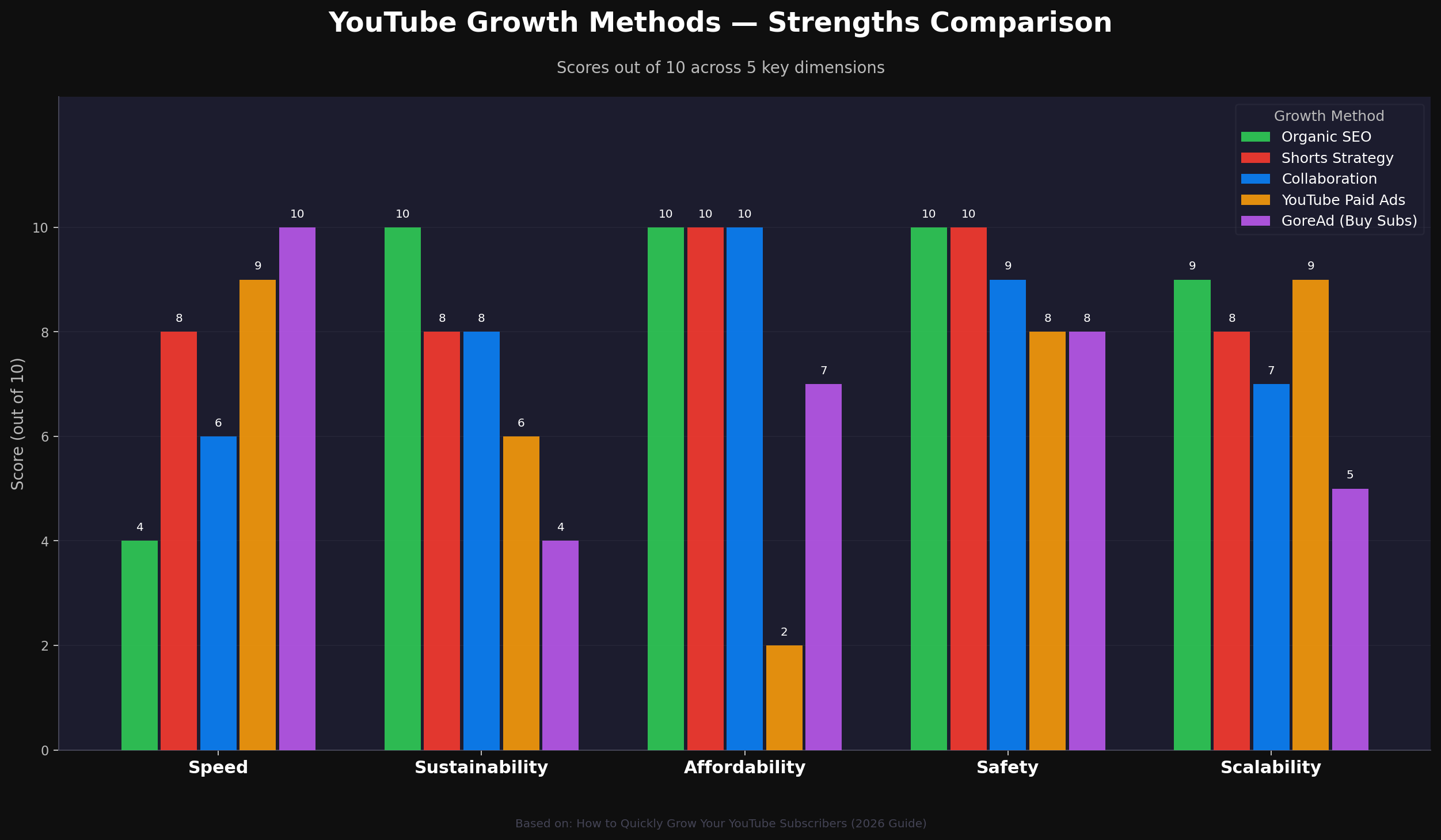
| Growth Method | Cost | Speed | Sustainability | Risk Level |
|---|---|---|---|---|
| Organic SEO | Free | Slow | Very High | None |
| Shorts Strategy | Free | Fast | High | None |
| Collaboration | Free | Medium | High | None |
| Paid Ads (YouTube) | $$$ | Fast | Medium | Low |
| Buying Subscribers (quality service like GoreAd) | $ | Instant | Low | Low (if done right) |
| Buying from shady sites | $ | Instant | None | High |
Step 10 – Track, Analyze, and Double Down
The creators who grow fastest aren’t just creating — they’re learning from every video and doubling down on what works.
Your Weekly YouTube Studio Checklist
Open YouTube Studio at least once a week and check these metrics:
- Impressions CTR — Are people clicking on your thumbnails? If it’s below 3%, rework your thumbnails and titles.
- Average View Duration — Where do people drop off? Watch your own video up to that point and ask: “What went wrong here?”
- Traffic Sources — Is your traffic coming from Search, Suggested, or External? Each source needs a different optimization strategy.
- Top Videos — Which videos are consistently pulling views and subscribers? Make more content like those.
The “Double Down” Rule
Every month, identify your top 2–3 performing videos and ask: what made them work? Was it the topic? The title? The format? The thumbnail? Then systematically replicate those elements in future videos.
Growth on YouTube is not random. It’s a feedback loop — and the creators who pay attention to the data and adjust faster are the ones who win.
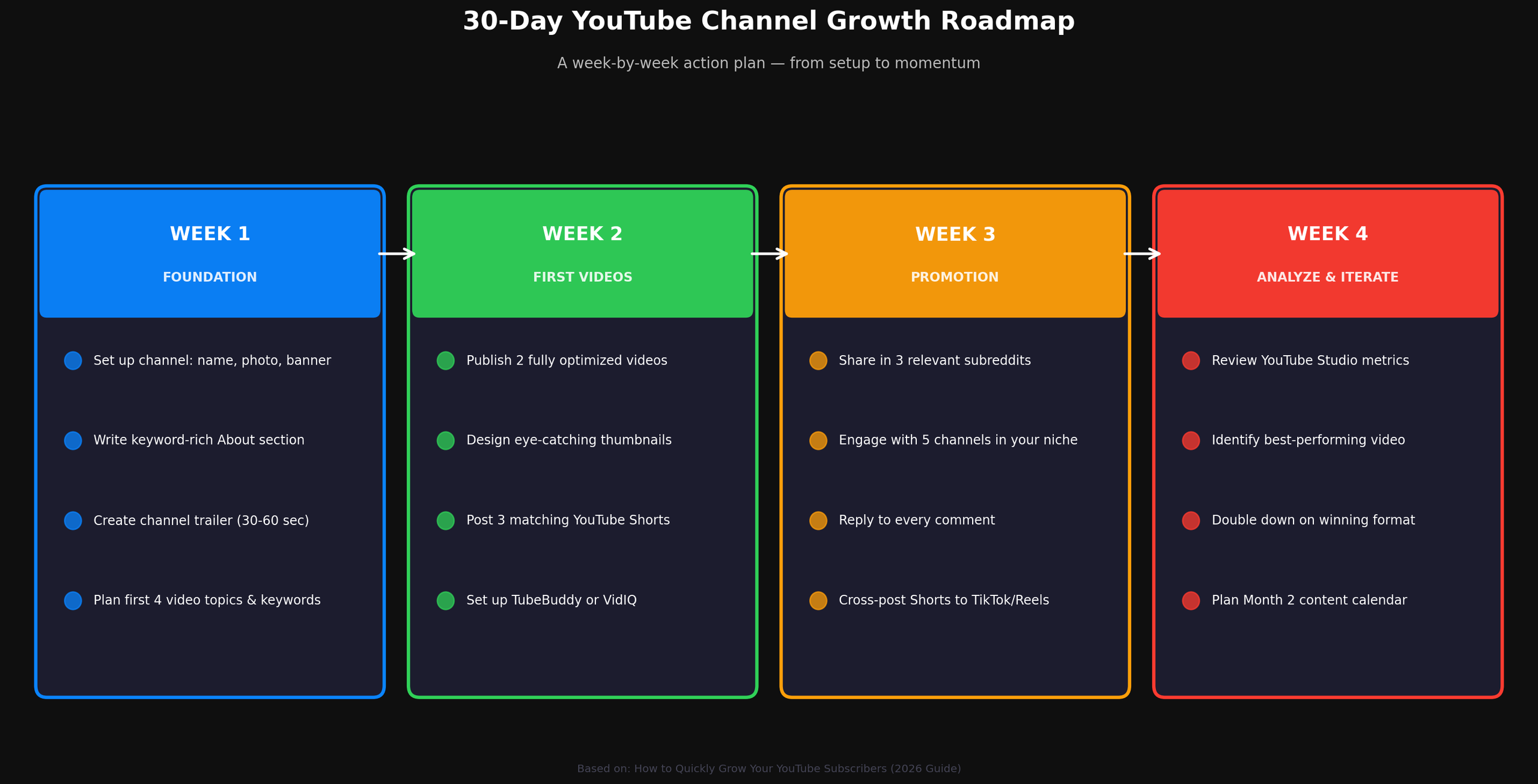
Your 30-Day YouTube Growth Action Plan
Here’s a concrete, week-by-week plan to get your channel moving:
| Week | Focus | Key Actions |
|---|---|---|
| Week 1 | Foundation | Set up channel, write keyword-rich About section, create channel trailer, research and plan first 4 video topics |
| Week 2 | First Videos | Publish 2 videos with fully optimized titles/descriptions/tags, design eye-catching thumbnails, create matching Shorts |
| Week 3 | Promotion | Share videos in 3 relevant subreddits, engage with 5 channels in your niche, reply to every comment you receive |
| Week 4 | Analyze & Iterate | Review YouTube Studio metrics, identify best-performing video, plan Month 2 content based on what worked |
Bonus tip: On Day 30, compare your channel to Day 1. Even modest growth — a few dozen subscribers, a few hundred views — is proof the system works. Keep going.
Frequently Asked Questions
How long does it take to get 1,000 subscribers on YouTube?
It depends heavily on your niche, posting frequency, and content quality — but most consistent creators hit 1,000 subscribers within 6–12 months. Channels that post 2–3 times per week and actively promote their content often get there faster, sometimes in 3–4 months.
Do YouTube Shorts help grow your main channel?
Yes — significantly. Shorts expose your channel to viewers who would never find your long-form content through search. Many creators report that a single viral Short added hundreds or thousands of subscribers to their main channel overnight. Always include a call to action pointing viewers to your channel.
Is it worth buying YouTube subscribers?
It can be, if done strategically and with a reputable service like GoreAd. Bought subscribers provide social proof and help your channel look established to new visitors. However, they should supplement — not replace — a real content strategy. YouTube’s value comes from real watch time, not just subscriber counts.
How often should I post on YouTube as a beginner?
Start with 1–2 times per week and maintain that cadence consistently. It’s far better to post reliably once a week than to upload 10 videos in a month and then disappear. Consistency trains the algorithm and builds audience expectation.
What’s the most important factor in growing a YouTube channel?
If we had to pick one: understanding what your audience is searching for and delivering it better than everyone else. Thumbnails, SEO, consistency — all of it matters. But content that genuinely helps or entertains your target viewer is the foundation everything else is built on.
Conclusion
Growing your YouTube channel won’t happen overnight — but it doesn’t have to take forever either. The creators who win are the ones who show up consistently, learn from their data, and keep improving.
You now have a complete roadmap: set up your channel the right way, create content people are searching for, nail your SEO, build click-worthy thumbnails, post on a schedule, engage with your community, promote everywhere, use Shorts aggressively, and track what’s working.
The best time to start was yesterday. The second best time is right now.
Pick your first video topic, set up your channel, and hit publish. Every big YouTuber you admire started with zero subscribers — and a decision to begin.
You’ve got this. 🎬
 Daria
Daria